By Bonnie Withers
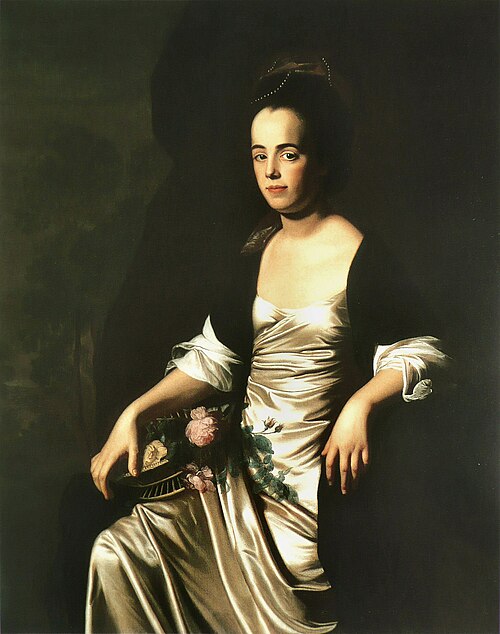
We UU’s cannot celebrate Women’s History Month without paying tribute to the amazing contributions of Judith Sargent Murray. Murray, born in 1751, learned early that women were not considered as intellectually capable as men. She wanted to share in the lessons given by a tutor to her brother, Winthrop, but was not permitted to participate. Instead, she gobbled up all the books in the family library and began early to write poetry and essays, including a great title, “Desultory Thoughts Upon the Utility of Encouraging a Degree of Self-Complacency, especially in Female Bosoms” .
Judith Sargent became involved with the development of Universalism with her father and her first husband, John Stevens. She was deeply involved in a petition to the Massachusetts Supreme Court which challenged taxation of church attendance (or refusal) and led to the establishment of freedom of religion in America.
After her first husband died, Judith Sargent Stevens married a man she had known and admired, the Universalist minister, John Murray. She continued to gain prominence in the areas of women’s rights and education. In 1782, she published the first Sunday school book for children, A Universalist Education. She is best known today for her two-part essay, “On the Equality of the Sexes”. Her collected essays, The Gleaner, would have been found on the bookshelves of George Washington and John Adams. After John Murray’s death, she completed the autobiography he had started, The Life of John Murray.
Although the name John Murray is more widely spoken in UU circles, it can be argued that Judith Sargent Murray made a more lasting influence on American society. An interesting footnote here is that Judith Murray kept blank books full of copies of her letters. This rich historical trove was only discovered 40 years ago by the UU minister, Gordon Gibson. Her story is still to be fully written.